

By James Lomuscio
Despite strong objections from Representative Town Meeting (RTM) members who argued that excess school monies should be returned to the general fund, the Board of Finance tonight unanimously approved a Board of Education (BOE) carryover account.
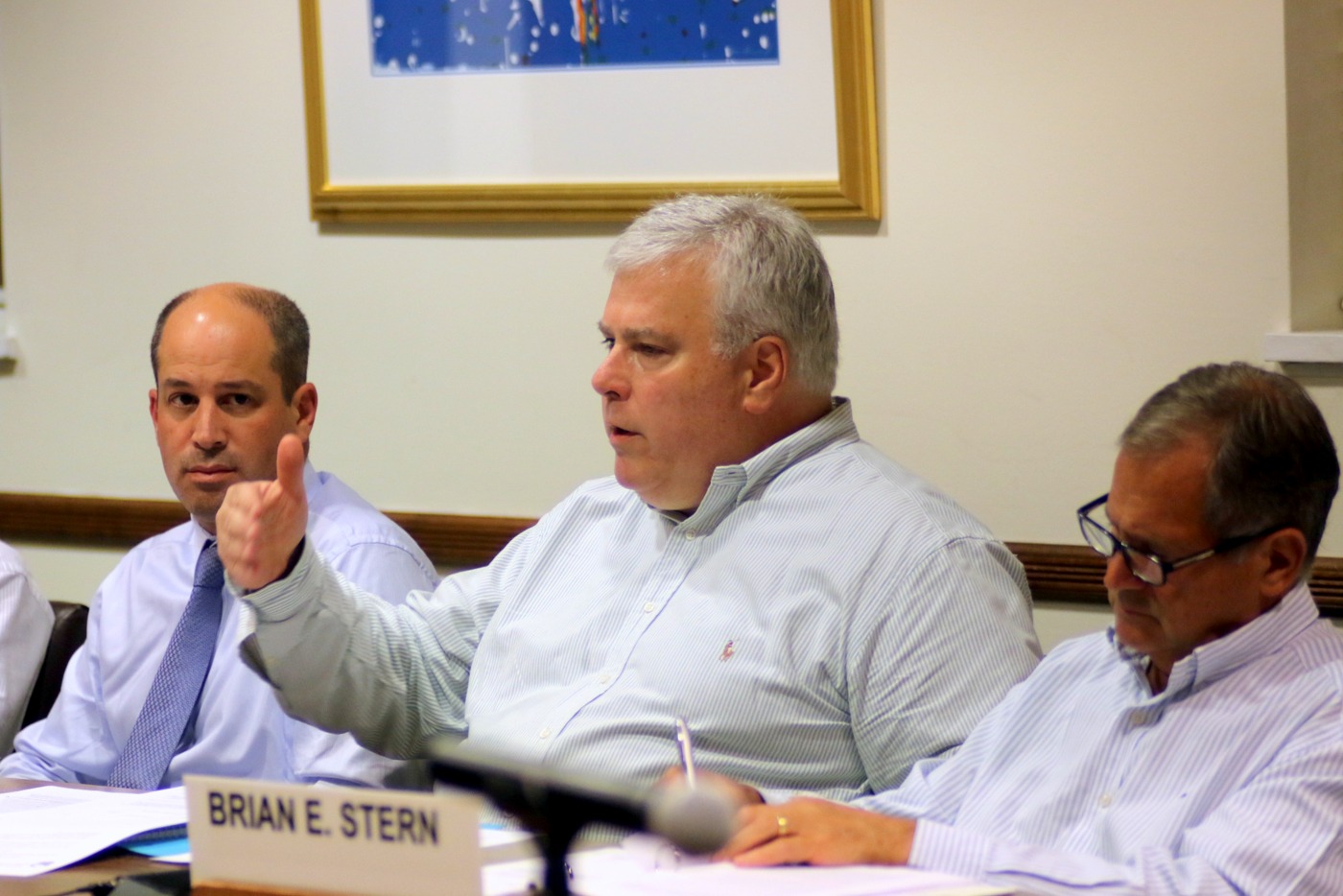
Board of Finance member Tom Lasersohn (c) makes a point at tonight’s meeting as Lee Caney (l) and Brian Stern listen. (CLICK TO ENLARGE) Dave Matlow for WestportNow.com
The unexpended operating funds, whether prior to the end of the fiscal year or prior to Aug. 31, can be used for future schools expenditures subject to an agreement between both boards, the Board of Finance voted.
As soon as the carryover account was approved, the finance board unanimously gave its approval to the schools’ transfer of up to $250,000 not spent during fiscal year 2014-15 to the new education account.
Board of Finance members Tom Lasersohn and Lee Caney, who had been studying the BOE proposal since July 1, described it in detail. Lasersohn said there was a limit on how big the fund can get, 3 percent of the schools’ operating budget, and that withdrawing more than $200,000 from the account would be subject to Board of Finance approval.
Lasersohn also said the finance board has the ability “to terminate the account if it turns out that it doesn’t turn out the way we wanted.”
“This will help us on the right path toward increased transparency,” he said.
Caney stressed the carryover fund would put an end to the “use it or lose it” approach as the school administration rushes to spend excess money before the year ends.
“Instead of having to spend it at the end of the year, put it into a fund where it could be spent more thoughtfully,” Caney said.
Other board members agreed, echoing the word transparency. When Board of Finance Chairwoman Jennifer Tooker asked for public input, Elio Longo, director of school business operations was succinct.
“Three words: I like it,” Longo said.
RTM members were quick to object. An hour before the finance board meeting, the RTM Finance Committee had held its own meeting on the same item.
“I urge you not to take action tonight, to do it in the dead of August,” said John Suggs, RTM District 5.
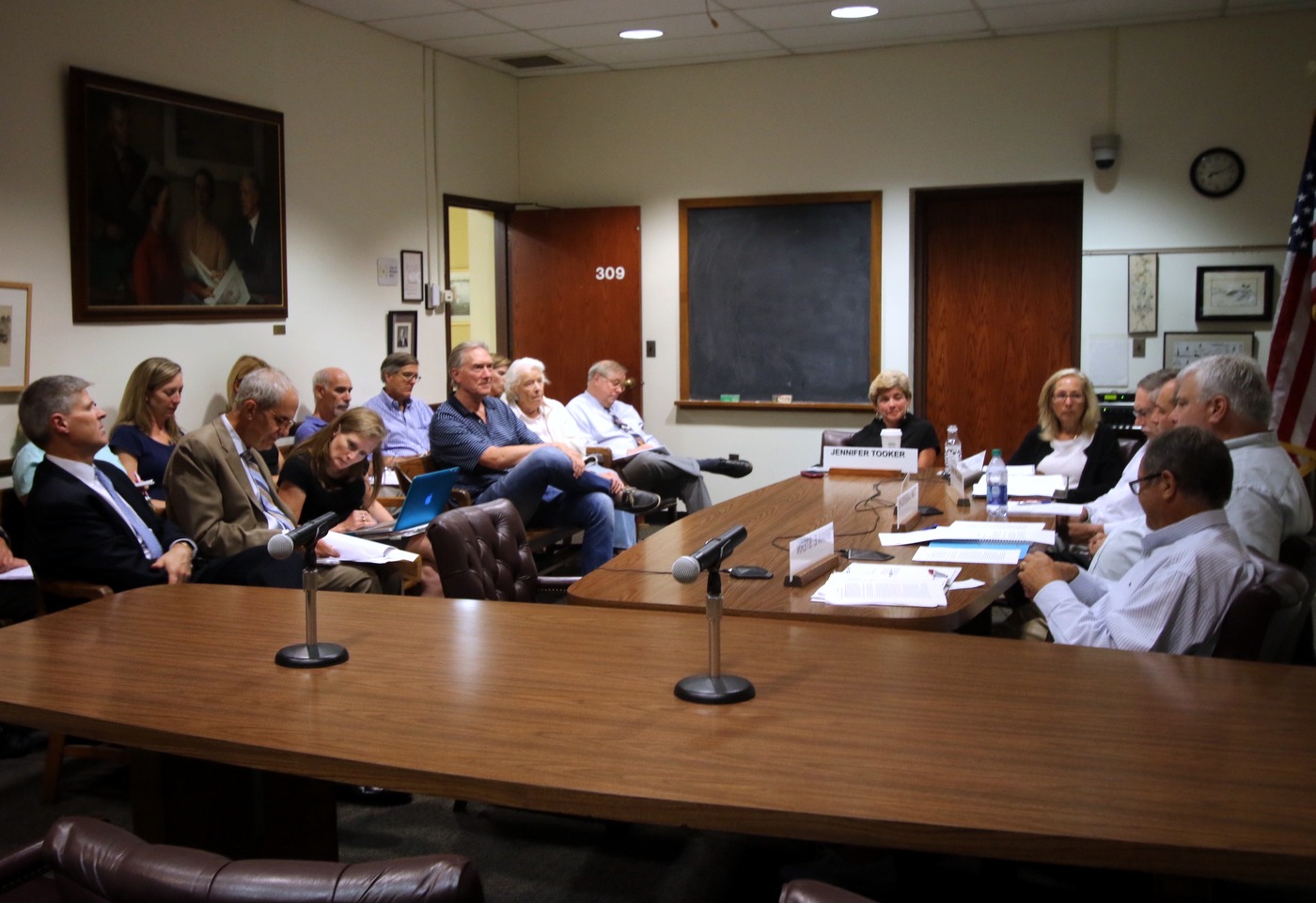
Tonight’s special Board of Finance meeting was held in a crowded Room 309 in Town Hall as the auditorium was used by the Conservation Commission for its regular meeting. (CLICK TO ENLARGE) Dave Matlow for WestportNow.com
“I believe this is a slush fund,” he added. “You’re simply doing it to solve the problem of spend it or lose it.”
Suggs talked about his great granduncle, a Massachusetts town worker dubbed Honest Bill Shennick because he always returned unspent funds back to the general fund.
Eileen Lavigne Flug, RTM moderator, also objected to the carryover fund, saying it skirted the normal process of funding requests going before the Board of Finance and then the RTM for approval.
“We have a system in Westport, and I think it’s called good government,” she said. ” …If funds are left over they should go back to the town …they belong to the taxpayer.”
Caney countered that the excess funds had already been approved by the appropriate town bodies, and Lasersohn argued that with the carryover fund would save the Board of Education time.
“You don’t have to go throughout hours long Board of Finance meetings and hours long RTM meetings,” he said.
“Extra funds should be prioritized by the taxpayer,” Flug responded. “Every department in town has to deal with going to the Board of Finance and the RTM. This is democracy, and democracy works slow.”
RTM member Allen Bomes said that excess school funds should be treated like anything else in the capital nonrecurring budget, with anything under $20,000 requiring only finance board approval and requests more than that amount requiring RTM approval.
Suggs spoke again, saying that the school officials have to remain “stewards of the public treasury.”
“The point is, it has to go through the public process,” said RTM member Paul Lebowitz. “You’re actually codifying a $200,000 slush fund.”


